Why Shouldn’t You Build Your Own SRE Agent
Posted on Wednesday, Nov 25, 2026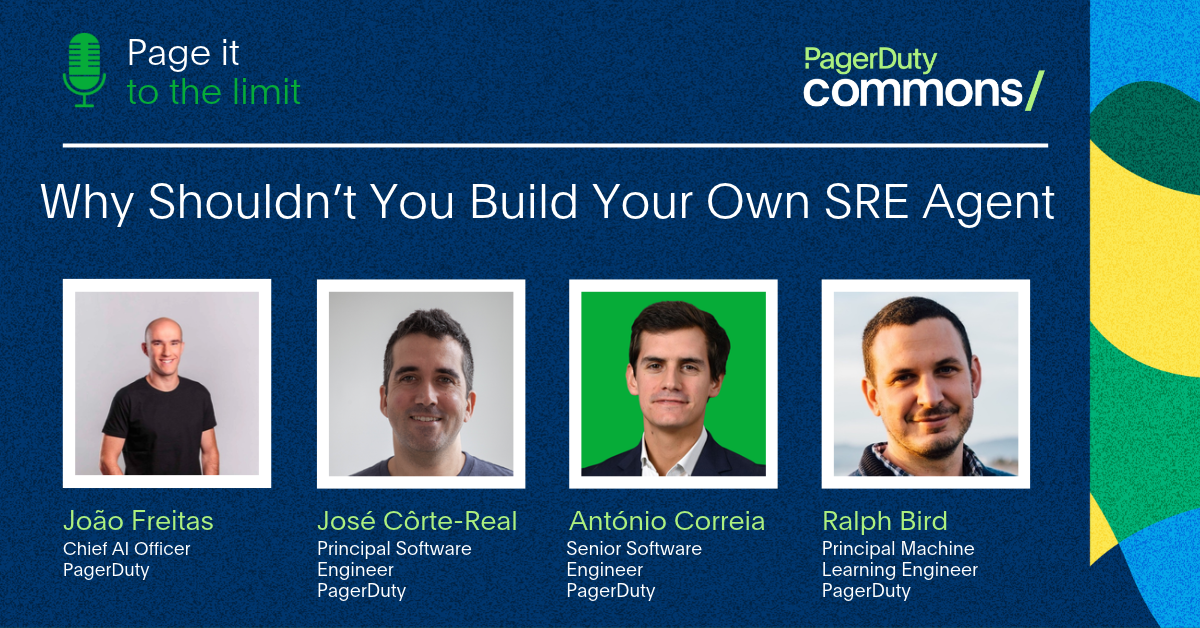
Transcript
Daniel Afonso (00:09): Welcome to Page It to the Limit, a podcast where we explore what it takes to run software and production successfully. We cover leading practices using software and industry to improve both systems, reliability and the lives of people supporting those systems. I’m your host Daniel Afonso, and you can find me on X, LinkedIn and Bluesky at danieljcafonso. All right, everyone. Welcome to a PagerDuty round table session. There’s no round table, but this is, we are in a round shape. So today we’re here to talk about why shouldn’t you build your own SRE agent? And before I start this, let’s just introduce myself. My name is Daniel Afonso. I’m a Senior Developer Advocate here at PagerDuty, and I’m just going to pass the mic to everyone to have them introduce themselves.
José Côrte-Real (00:51): Thank you. Hello, I’m Jose. I am a principal software engineer working on all our agents, including our SRE agent.
Ralph Bird (01:02): Hi, I’m Ralph, principal machine learning engineer working across all of our agents, in particular looking at how we can assess their quality and performance.
João Freitas (01:11): Hi, I’m João, chief AI officer here at PagerDuty and leading the charge on our AI agents.
António Correia (01:17): I’m Antonio. I’m a senior applied scientist and focusing on evaluating the performance of our agents.
Daniel Afonso (01:24): So we’re here to talk about a problem that we have, which is operations and engineering in the era of AI. There’s new tools, cognitive overall is hitting the top, and this also affects us when we’re dealing with incidents, obviously. So at the end, this will transition into agents. So what I would like to get from you is understand is what do you see that’s the main problem that’s happening right now in this era and why are we aiming to solve it eventually?
João Freitas (01:56): Yeah, I’ll take that one, Danielle. So if we think about operations, the holy grail has always been to how do you get to an autonomous mode where you’re going from an issue to an automatic resolution? And there’s been in discussions for years and years. And now with agents, we start to feel that that’s actually possible, right? It’s actually possible to offset all these work that we have with operational issues to agents. And SRE is just like that opportunity in order for agents to help there. If you think about the operational work that is usually done by an SRE, an SRE is an expensive skill, there’s a huge opportunity there for agents to help out in how do you prevent issues, when they happen, how do you fix them and then how do you learn from it? And so here we’ll cover a little bit about all these things.
(02:57): So yeah, that’s the problem that we are facing right now.
Daniel Afonso (03:01): So that segues us into the topic of discussion, which is the SRE agent. So what exactly is an SRE agent?
José Côrte-Real (03:14): I can start. So we actually, I remember perfectly, one key point for us was when models started getting good enough where we started using Cloudcode, for example, to do instant response. So we were connecting CloudCode to our logs, to our metrics, and we were using it to help, maybe I don’t remember how to query the logs or the metrics or I don’t know where everything is, especially if there’s a bigger incident, I might not know all of the services involved. And so by looking at the way CloudCode worked and how capable models were, we started to be more ambitious about, okay, what can we do with our SRE agent? Is it just a tool to ask questions and get answers or is it something that can be more autonomous and explore for us and have information ready for when we get to the scene?
Ralph Bird (04:13): Yeah, for me, there’s two tasks really for an SRE agent. The first task is I really don’t want to resolve incidents myself. So if agents can read my emails, read my Slack, write my code, do everything else, why not have them resolve their incidents? So that would be my first goal. But then there’s also the times where I know it’s not going to be able to do that and I’m suddenly in an incident and I’ve been given this code base that I don’t really know very well or I haven’t had worked on recently or something like that. Can it help me? Can it provide me with that tooling, provide me with that support? And as I said, help me with the log search and things. I’m not very good at searching logs at the best of times at three o’clock in the morning remembering exactly the query syntax.
(05:00): It’s not easy, but I’ve got a tool that can help, that’s where I think SRE agent can really help for me. It’s that providing the assistance to the responder whilst they’re dealing with that highly stressful period of time.
João Freitas (05:17): Yeah. One of the things also to have in mind is that the SRE agents category is evolving. And I think today we have a much broader view of what an SRE agent is and what it can do. So for example, you have SRE agents from observability companies that are more leaning towards telemetry, have SRE agents from cloud infrastructure companies that rely on those signals in order to get to a root cause or to try to mitigate the issue. And so each person that builds an SRE agent is taking advantage of the signals that it has. And we know that an agent will only be as good as the input that you give it, as good as the context that you are able to provide. So we’re seeing this evolution of the definition of an SRE agent and it’s now I think a more broader category than just focused on SRE work and it extends to DevOps and to other tasks that are typically deemed as operational tasks that people need to do.
Ralph Bird (06:21): And I think we’ve seen that in our own agents. We’ve built them over the past two years. We started off just with tools that were helping with the management of an instant, so something that maybe catch people up in what’s going on or provide additional context. But as the models have got more powerful and the ability to connect them with more data sources more easily has happened, we’ve started putting more and more trust in the agents to be a helpful tool with the diagnosis and supporting us and supporting the responders.
Daniel Afonso (06:51): So you said a keyword there, trust. How do you define trust in these agents?
Ralph Bird (07:00): I think that’s something we’ve all been on in a journey in the last year. If you asked me this time a year ago whether I would be trusting an agent to write code for me and I wouldn’t be reviewing it in detail line by line, picking it apart and everything, I probably wouldn’t. I’d be saying that’s years away. Now I’m getting to the point where yes, the agent writes the code, the agent reviews the code. I’m still reading it. I’m still accountable for it, but I have developed trust in it because I’ve seen how effective it is and I can now step back a bit more and focus on the big architectural decisions. So I can trust it on the smaller stuff to allow me to think more on the bigger stuff. So for me, an SRE agent, I’m going through a similar journey in there.
(07:42): I’m learning to trust that it’s doing the log searches queries correctly, getting me that information so I can worry about what’s coming out of that query and thinking about that and thinking about how that’s helping me to mitigate this issue rather than having to really focus on the details.
António Correia (07:59): Just to add to that on the trust side, one thing we’ve noticed as we were kind of evaluating agents and comparing our own agent through time, initially, let’s say one year ago people were very concerned about are LLMs hallucinating content and things like that. And one of the things that we were actually looking at is how often is our agent hallucinating things that weren’t in the data that it searched for? And that’s one metric that we were looking at, but with the latest months with model developments, it became not a very relevant metric to look at because the hallucination rate became so low. And so that kind of shows that you can trust these models a bit more because it still is an issue that is out there, but the way at least that we were measuring it, it stopped being so evident and so you need to look for more subtle ways to look at it.
(08:50): So I think that shows that trust is kind of building with model development.
José Côrte-Real (08:54): I’ll just add a little bit to that. I agree completely and we’ve seen in multiple fronts that model capability has fundamentally shift and forced us to rethink how we build these systems. I remember not touching on trust now, but we were talking about logs and metrics maybe two, maybe more than two years ago, we were looking already at logs and metrics and it would be completely not feasible to try to do it as we do today. So we were looking at techniques where we were ingesting logs, making logs easier to parse. Today, we see models being able to search in a huge search space on demand with very little prompting. But on the confidence side, maybe just to give a sneak peek of how we were thinking, what we’re building besides this, which is natural, we get accustomed to the tools, we gain trust because they’re consistently good, but we’re also building our agent in a way where the evidence, the key aspects that ground the answers are also visible to the user.
(09:55): So when you get some information back, you can also get the URLs for the log queries or the metrics to confirm yourself. So you don’t need necessarily to just trust the agent blindly. But yes, a lot of this I think comes down to this sort of raw capability of the agents to do a lot of different tasks very well.
João Freitas (10:14): Yeah. The thing I would add there is that when the agent fails, because it’s not 100% accurate, you want the agent to learn from its mistakes. So that’s also an important part is how do you, adding on top of what Zé was saying, which is you need to have the clear evidence, you need to understand why the agent gave those answers, so be fully transparent. But when the agent fails or misdirects you and so on, you need to be able to correct it so that next time the same issue happens, then you already have the right thing in place. It’s already doing what you expect. And sometimes it might fail because, oh, I missed some connection, some integration or because my runbook was pointing to the wrong thing. And so fixing that will also help the agents as it goes and it will introduce this continuous learning.
(11:09): And as you see the agent getting things right over and over and over, you start to increase its trust, the trust in it. And also it allows you to start delegating more to the agent, which is the journey that we have all been through is we started with agents that were just doing very simple things. And today for several people, you already rely on agents to do things that you wouldn’t find possible or acceptable two or three years ago where everyone was discussing there needs to be a human in the loop. Maybe there’s things as you get more trust that you don’t need a human in the loop. And one of the goals is if you get woken up by a minor issue in the middle of the night, how do you avoid that? How do you have the agent incorporate the knowledge that you have and not wake you up in the middle of the night?
(11:59): And that means that the agent not only needs to diagnose correctly, but it also needs to act. And he needs to understand, is this a severe issue? Do I need to wake up someone? Can I solve the issue? And so when I wake up in the next morning, I’ll have a report about these were the actions that the agent has taken, but I need to get to some level of trust in the agent to be able to delegate that agency to the system, right?
Daniel Afonso (12:27): Yeah, that’s great. Thank you so much to all of you for chiming in on that. So now you mentioned that we’ve been building this for two years now, around that time, give or take. What have been some of the learnings that we got out of here and where do you see the biggest effort on building these agents?
José Côrte-Real (12:47): Well, I can start. I think my personal belief, and I think everyone else here will agree, being able to measure the problem you’re trying to solve is more than half the battle. So the benchmarking, the evaluations, having a disciplined way of understanding if a change we are making is actually improving the agent or if it’s just noise and it’s a really complex problem. Because if we think about the kinds of agents we’ve built so far, we started with a more interactive, and obviously we still have it, conversational agent, that’s the human interface that people use to ask questions, get answers, and it’s relatively fast. Typically in those sorts of agents, you can identify the critical user journeys, like what are the key capabilities, what are the key functions we want to have and test them in isolation, do a divide and conquer. Not saying it’s easy, but it’s a discipline that I think we’ve gotten pretty good at and we can consistently build agents that follow the cost, latency, and quality characteristics that we need.
(13:54): Then we also started working on asynchronous long running agents, our deep investigation mode. And it’s different in the sense that it’s less, I don’t want to say scripted, but it’s a more open-ended problem. So maybe we have an incident going on and our belief is that an SRE agent shouldn’t just be a question and answer kind of agent. It should work along the responders for potentially hours. So it needs to be able to ingest information as it arrives. It needs to run for really long horizons. So because it’s open-ended, because we want it to be modular and work with different capabilities, different tools, the way you test it and the way you understand what’s really working, what’s not working, what’s worth spending our time on and investing versus what will become irrelevant maybe in six months when a new model comes out, I think this is the biggest challenge and it’s something that I think we’re getting potentially good at.
João Freitas (14:52): Yeah, I think you touched on a great point, which is how do we identify where to put our bets on? What part of the harness? And when I mean harness, I mean anything that is not the model or the agent itself, what parts of the harness are we going to be investing in? And we know that in six months the models will be much better and will have more capabilities, but there are things that still a model won’t be able to do. And so what we’re working on is on things that you’re able to give to the agent that the agent is not going to be able to fetch by itself or that is not obvious or evident based on the data that it has. There’s a few examples of things that maybe Ralph and Zé can chime in, which is things like understanding the blast radius of an incident.
(15:45): So if you want to understand the blast radius of an incident and how that information can help your SRE agent to be better at diagnosing and mitigation, then these are things that the malls might not be able to do by themselves where you need to inject the right amount of data, the right data in order to get there. But maybe Ralph can chime in more here on this.
Ralph Bird (16:06): Yeah. So I think blast radius is an interesting one in that it’s how do we give context to our agents? This is the harness that Cheryl was talking about. Two years ago when we first started building this, we put a huge amount of effort into building a package of context that we sent to the agent before it started work. And the reason we had to do that was agents had a more limited context and they were more susceptible to if you gave them lots of information, they’d lose some of that information, they’d forget it. Over the last two years, we’ve seen a dramatic change, both in the size of their context windows and how good they are remembering information in that. So we haven’t had to work so hard on managing the context, filtering it down and just keeping a small amount of information in the main controlling agent.
(16:53): Instead, we’ve been able to trust the agent a bit more and give it more information. The advantage of that is it can then correlate that information a lot more. It can go, “Ah, I see the metrics changed at this point. At the same time, I see the logs change there.” That’s when this service started talking to it. I can go and look at that service, use that blast radius, that call change has changed at that point. I can now go off to the code. It can start working through that. Whereas two years ago it would’ve had to call one agent to do one things to call another agent to do another things to do another agent to do something else because that was the only way it could keep that context clean and short enough that it could understand everything.
João Freitas (17:34): Yeah. One other part that is super important is when you add new things to your harness and you’re injecting other sorts of information into the context, how do you measure it? How do you know that it’s actually producing the effects on the metrics that are relevant, which are, am I getting the root cause? Am I being able to propose the right fix? Am I misdirecting people to the wrong problem? And so we’ve also also done quite significant investment in benchmarking, understanding how our agent is performing against, for example, cloth code connected to several tools. And that was a big game changer for us because we could decide where to invest in the harness, right? But Antonio can probably give us more on that.
António Correia (18:33): Yeah, exactly. So to pick up on what John was saying, one thing we noticed is that sometimes you would try to course correct your agent’s outputs based on your evaluations. It’s not getting right this specific type of problem and you would spend quite a bit of effort trying to optimize it towards that scenario, for example. And then a new model comes out one month later and you would see this is no longer an issue even with a simpler setup that doesn’t need to kind of tweak so much the DRness towards that. And so this is kind of, I don’t want to say kind of like a bitter lesson that we had of not over optimizing the harness too much and always be open to new models will change things a little bit. So
José Côrte-Real (19:18): Yeah. I’ll follow up from there. I think, and this is one of the concerns I have where we bundle everything in the harness, right? I think there are elements of the harness that are worth investing in and will actually compound as models get better. And there will be elements that maybe you need to do it today because the model has certain shortcomings. Maybe you need to make the tools more ergonomic for the agent. Maybe you need to cut off on the context like you were saying. But I think there are ways, perhaps potentially simple ways to think about what will survive a new model and what will become less relevant. So for me, anything that we do that is trying to improve the model’s reasoning, so things like adding reviewers, adding divide and conquer like coordinators and multiple investigators, which we’ve done, right? What we observe is that as the sort of innate capability of the model improves, those become less relevant and maybe actually become detrimental.
(20:24): So a good example is maybe you’ve noticed this in Claude Code, the to-do tool that keeps tracks of tasks was removed for after I believe Opus 4.8 because it’s just more context and the models are very good and we’re benchmarked to perform without that tool. So really it comes back to what João was saying, you can make a change, it might sound reasonable and you test it and look, it’s doing what you want. But when we think about especially this kind of long trajectory, open-ended problem agents, how do you really know that it’s statistically significant? If we think about the agent trajectory as each point in the journey, having a probability of going left or right, a small change at the beginning can have a really outsized impact. So you can get really high run to run variants. And so this really requires a disciplined approach to this testing and what we’re doing.
(21:16): And so just to finish on my thoughts on the harness, like I said, we’re bundling a lot of things in the harness. And I think the really high leverage things that the models will not be able to substitute is new signal that the model can never get. So blast radius that Ralph was talking about, we calculate how alerts co-occur over time to understand which services are co-alerting. So it’s not necessarily saying this is the cause, but it’s saying, “Hey, there’s something fishy here. These two are always alerting at the same time, so it reduces the search space.” This is something the models cannot get at all. It’s not in their training data. They can try to get it really through many tool calls maybe, but that one would be really difficult, almost impossible, I would say. So really thinking about, and I think for us, the institutional knowledge, how the systems are set up, how people work, those are the things that are specific to each customer, to each team.
(22:15): So the models will not know that.
João Freitas (22:17): Yeah. And I think that there’s a boring part to the harness that becomes super relevant. You said something that was interesting is that each team will probably
(22:27): want to customize their SRE agent, right? So think about the use of a security team and how a security team uses agents, the type of integrations, how they customize it, the type of permissions, who has access to that agent, who can run it, who can see the results. All of that is very different from a team that is doing just front end development, for example, a backend development. And so there’s a series of things that we might include in the harness that like permissions, being able to audit what the agent is doing, being able to configure it differently for each team so that each team is actually taking the most advantage of that agent and they’re introducing skills that are different maybe from user to user, from team to team. All of that is, I would say, a more boring part, but very, very important for you to get to trust the agent and for you to get some real value out of the agent.
(23:28): And so it’s not only often we tend to fix on are we getting to the root cause, but there’s so much more about it. First, it’s not about the root cause. It’s about how you mitigate the issue as fast as possible. And second, there’s when you go into more enterprise worlds, there’s so many things that also matter and giving all of that is maybe more difficult if you’re just trying to get to use cloud codes and connect a few tools.
Ralph Bird (23:59): I wouldn’t say maybe more difficult. Some of the biggest problems we’ve had have probably been security and how do we get multiple users working with the same agent with the same set of tools, but they have different sets of permissions. I was at a conference six months ago and speaking about this with a couple of other senior engineers and one of the members of the audience came up to me afterwards and said, “I don’t see what the problem is. I have one engineer working on one session with one agent. He’s got his permissions. I’ve got another engineer on another session with his agent. He’s got his permissions. They’re fine. They’re working apart.” I was like, “Okay, that’s great. Are your agents sharing context?” “Oh yes, of course. We have an S3 bucket behind it and one agent’s able to post to it. The other agent can read from it.
(24:41): And that’s fine because the agent’s… Oh. “And he literally realized whilst talking to me that he’s now broken his security model and he needed to go and turn off his agent that he was building. These are the things that really are challenging and difficult to think about. And this is a problem across the whole area of AI agent is we haven’t built security for agents. We’re working out how to do it as we’re going along a bit and thinking it through and maybe being a bit slow but safe is more important at times than just going here, take your access, do everything, and then suddenly you have a big security incident or something like that. So we really do have to think about this for the customer, for their security team, for the enterprise security that is required to use these things effectively on mission critical systems.
Daniel Afonso (25:36): We are seeing a lot of vibe coded SRE agents right now. We are seeing a lot of people in saying,” Okay, I can just use Qualt. I can just use my agent my day today and have it do what an SRE agent claims to do. “What’s your refute to when someone talks about that?
José Côrte-Real (26:00): Should I start? I think we already covered some of it, right? I’ll start, but then I’ll pass to Ralph and Antoni to talk about the benchmarking because again, I do believe that if you start with a strong, robust, sort of disciplined approach to testing and you understand what you’re testing and how you’re measuring, you’re in a much better place. And this takes a lot of work. It’s not like you run it once or twice. We have run hundreds and hundreds and hundreds of benchmarking runs with different conditions, with simulated environments, with our own past incidents. So it’s a really nuanced discipline that I believe is also still evolving like security. And there’s no sort of quick wins, like I said. If you’re thinking about building an SRE agent and you want it to support code, access to code, maybe it’s GitHub, maybe it’s GitLab, metrics, traces, logs, maybe you also want some documents in there and you keep adding new capabilities, new view.
(27:01): How do you know that this is an interesting phenomena we observe? So for example, trying to make an agent to coax it into exploring further, to use more data, sometimes it backfires. It works well for certain incidents, but the agent becomes uncertain and starts hedging its bets and being less assertive about what was actually the correct answer, but it sort of argues himself out of the correct answer. So we’ve seen this. We’ve observed instance where, oh, if only the agent had gone upstream and tried to find the original contributing factors, we do all of that and then we realize actually we’re overfitting to these particular scenarios. When we look back and we run our benchmarks, we’re like, oh, actually that didn’t help. So I think it’s true. It’s like the Pareto principle. You can get a lot done with just clot code and some tools and the kernel of functionality is there, but then everything else that Jerome talked about, like how do you deploy it?
(28:07): How do you audit it? How do you can go back and understand if your agent misbehaved? What about the models you’re using? What if your provider goes down and you need a fail safe? How do you handle all of that? So it is true that you can get some of it, you can get some of the way, but getting a robust enterprise grade SRE agent takes a village.
João Freitas (28:31): Yeah. Jose highlighted what I was going to also bring. It’s like you need to have some sort of isolation. You need to have a reliable agent. This is the type of agent that can’t fail when your systems go down. So think about the investment that you’re putting here. So you need to have a separate environment, separate deployments, and you need to make sure that the agent is reliable and works when it’s needed. And that requires some investment. If you add all the other things on top that we were just talking about, the harness as we were describing, the boring part and non-boring part, all of that, it starts to have a tool on its own. And if this is not your core business, should you build an SRE agent? Probably not because you want to keep evolving it. You want to keep how does it behave when new models come out, you want to keep upgrading it.
(29:29): And so you’ll need to have someone maintaining it, looking at it, nurturing it, evolving as also the ecosystem evolves, and this is moving really fast. So it ends up being a long-term investment.
Ralph Bird (29:42): I think it’s also useful to have information around the SRE agent. I mentioned it earlier with our AI capabilities, but we also get a lot of information coming from an incident call, for example. So we have systems that can take the instant call transcript Summarize it, clean it up and inject it into the SRE agent so the SRE agent knows what we’re discussing on the call and can react and respond to that. That’s not trivial work to do. We’re not just giving the raw transcript from the call. That’s too much information. It’s too much bloat. We’re pulling out the key bits of information. I’d also say there’s other ancillary benefits that come with that. When I’m an incident commander or an incident responder, I’m not just worrying about resolving the issue. I’m also communicating to stakeholders, managing people, catching people up when they join that.
(30:33): All of this tooling around it. If you have a well set up SRE agent, it’s also a useful incident management agent. It knows the context. I’ve joined a call. I don’t know what’s going on. I don’t want to interrupt the person who’s trying to resolve this. But if I can ask the SRE agent, “Hey, tell me what’s going on. What are the issues? What are the symptoms?” I’m up to speed. I can get going without distracting the people who are working.
Daniel Afonso (30:58): And before we go to Antonio, just something very quick that I think it’s very interesting on the point that you’re talking about. When you have an agent listening to the call and getting this data and providing it back into your contact, it’s very easy to get into red herrings, going into a way, okay, I found the problem is here and that might have shown up. If it was just doing the transcript, it might show up in the transcript and someone say, “Okay, cool. The incident is wrapped up here.” So there’s these small nuances as well that you have to handle with this, that I find that it’s particular interesting because if you don’t have these extra context, extra thing that is being injected in there, I think my question here is how do you handle these nuances? What’s the type of the value that you want to do here?
(31:48): And Antonio, I don’t know if you can answer this part or if you want to.
António Correia (31:52): Well, just one thing briefly about the other point about benchmarks really quick. And I want to speak against my own work because I’ve been working on benchmarks quite a bit. But I think all of these things that we are saying and also tying into what you are saying, they don’t easily show up on benchmarks. And in fact, when you put together your own agent, you can get a fairly decent result maybe without too much effort. There’s all these things that aren’t captured by a benchmark. And so it’s something that you need to balance the two things. You always need to have the evaluation quality next to you to know how well you are doing. And I think to our credit, we’ve been paying very close attention to that and making sure that our baseline is very high up there with the best that we see.
(32:35): But also all of these things are hard to measure in a way that you can repeatedly see. And so it’s a kind of a balance between making sure that you’re doing the task right, but also having all these other things that are hard to measure.
José Côrte-Real (32:49): Exactly. I was going to follow up on that to your question about the confidence and the nuances in the red herrings. So we do both, like we said, sort of synthetic benchmarking, but we also look at our own incidents by looking back in time and replaying them. We can actually also replay the transcripts. And so when we’re making changes and we’re doing these sort of calibrations, we can see, and sometimes people will also follow red herrings, not just agents. So it really comes down to how do you do this confidence calibration? And for us, it’s really been how do you take the evidence and the quality of the evidence and then have a set of rules for the agent to say, okay, if I have this, for example, I’ve seen, observed the explanation directly in the code. I see in the logs the exact log that would explain the symptom that’s being observed.
(33:45): We have confirmation from people that there’s a problem there. These all compound and we can then use them to see how well the confidence level of the agent matches to the actual evidence. And so the way we are billing this today is that right now it’s not perfect. It’s still a work in progress, but I think it’s pretty good. Sometimes the agent will still have somewhat lower confidence our own agent even when it’s correct. But what we observe is that when it has high confidence, it’s very rare that it’s wrong because the amount of evidence that it’s accumulated and observed, it’s quite high for those sort of confidence levels.
Ralph Bird (34:25): I’ve got a question for you a bit, Jose here. One of the problems we often find with this is how do we balance giving multiple solutions or multiple hypotheses versus a single hypothesis? Because in an instant response, I just want to be told what’s wrong. But maybe what it thinks is most likely wrong isn’t actually what’s wrong and it’s actually second or third on the list. So giving multiple hypotheses.
José Côrte-Real (34:49): Exactly. So that’s exactly the point in what we’re exploring now. Through this iterative process of investigation and following evidence, you can naturally come up with a ranked list of hypotheses. The good thing is that as humans, we have a lot more context and still I hope and believe intelligence to really interpret and analyze the information. So even if we see the headline or the number one explanation, we can maybe sometimes quickly see, I don’t think the third one seems more relevant to me. Actually, I think there’s a good analogy for this. Long are the days of stack overflow, unfortunately. But I seem to remember most of the time for me, the second or third answer was the one I cared about. The first one was like, no, that’s not it, dude. That’s not what I want. So I think it’s the same. You can rank them.
(35:41): We obviously try to have that calibration also correct that the number one is the correct evidence. But like you said, these are really difficult problems, incidents and going back to the, you can get a good score in the benchmark, but real world incidents can get really complex, really nuanced. Even after a week after the incident, you’re still doing the post-incident review and really trying to figure out what were the contributing factors? Sometimes you figure out actually there was more failures than what we observed during the incident. So yeah, I think I don’t have the full answer unfortunately, Ralph, but I think simply showing the ranking, humans are pretty good at picking up on the context and saying, “Oh, that third one looks, let’s pick up on that one.” And the way we built the agent is also that you can steer it and then say, “Actually, I want you to double down on this.” So it will then, like I said, it’s built to run for potentially hours and to take that information and continue and follow that trajectory.
(36:39): So it’s not just agents, it’s agents and humans working together.
Ralph Bird (36:45): I think that’s fascinating. You’ll talk about how the human works with it. And this is something that, going back to your initial question, what’s the difference between a claw code session and something we built? It’s like we want this to be something that’s ergonomic and easy to work with during an incident and providing the right information. I don’t want to see a stream of information coming at me. And then somewhere buried in there is the one sentence that says, “You can mitigate this now by doing this.” I want to have a UX that goes right, big, big letters, bright red, whatever it is, mitigation, add this one line here, turn on this feature flag, whatever it is, so we can stop the bleeding. And then, oh, okay, how do I go in there? Where’s the evidence? Where’s that? But I think the old fashioned human agent UX problem is a massive area where work around it really helps, really helps in a stressful situation.
Daniel Afonso (37:43): All right. So we are at the end, but before we go, the question that brought us here, who would like to take us home and tell us why shouldn’t you build your own SRE agent?
António Correia (37:55): Yeah, I think if you want to save on a lot of headaches and stay focused on your main area of expertise and you don’t have, let’s say, a lot of time to spend on because you need to focus on your core business, I think from all of the things that we discussed here, it would save you a lot of headaches if you’re not trying to build this on your own because it can be a bit deceiving. It can look like you’re getting to something good, but at the end of the day, it’s going to compound into a lot of maintenance and headaches that you’re going to be thinking of in edge case and things like that, that you don’t need to be worrying about. So that’s kind of my take on it.
João Freitas (38:34): Yeah. Karpathy had an interesting article that he called March of 9th, and you can build a prototype really, really fast. We were just commenting on this, but the first version of the SRE agent was built maybe in a day, in an afternoon, and you had a prototype working. Awesome. But then getting it to a state where it is usable by the entire development team or by your company in general, and getting it to a state where it’s reliable and it doesn’t fail when you need it the most, that takes a lot of effort. And to what Antonio said, are you going to put all that effort, all that investment in a system that is not your core? So something to think about. And I think this is an emerging area, so it’s very natural for people to be experimenting, understanding what it can do. But I think we’ll get to a point where you just want a mature system that works.
Ralph Bird (39:40): Yeah. They always say the best incident is the incident that never happens. For me, the second best incident is the incident I don’t have to do anything with. So why
(39:51): Not build your own? Because if you build your own, you have to manage it, you have to get up, you have to turn it on, you have to run it, you have to shut it down. If you can have one that’s on call and the only reason that you know there was an incident last night is you get an email when you come into work in the morning that tells you it’s been happened, it’s been fixed, everything’s been logged, all of the guardrails are in place, all the security’s done. That is an awful lot less stress for me and an awful lot more time I can spend doing the things that I want to be doing, which is building features for my customers.
Daniel Afonso (40:22): All right. So that’s it, everyone. Thank you so much. Thank you, Antonio. Thank you, João, Ralph, Zé. This was a great time. Stay tuned for the next one and have an uneventful day. Bye everyone. That does it for another episode of Page It To The Limit. We would like to thank our sponsor, PagerDuty, for making this podcast possible. Remember to subscribe to this podcast on your favorite streaming service. If you like what you heard, you can find our show notes at pageittothelimit.com. And let’s continue this conversation on PagerDuty Commons at community.pagerduty.com. Thank you so much for joining us and remember, uneventful days are beautiful days.
Show Notes
Additional Resources
- Read Lessons from PD Labs: From experimentation to a production-ready SRE Agent
- Read the SRE Agent Playbook
- Join the PagerDuty Commons!
- PagerDuty Home Page
- Transcripts by Rev
Guests
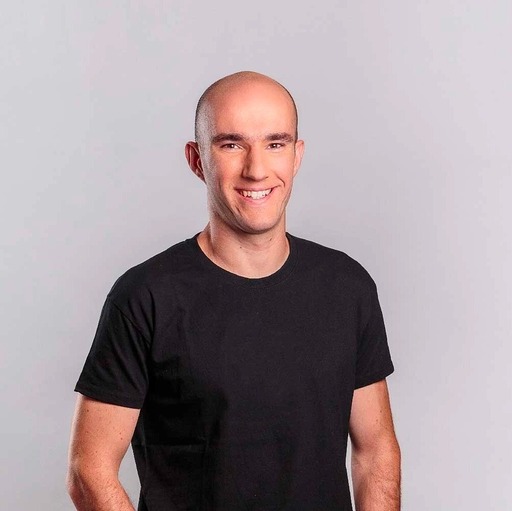
João Freitas (he/him)
João Freitas is the Chief AI Officer at PagerDuty. João leads PagerDuty AI initiatives and is responsible for scaling engineering excellence, technical innovation, and fostering a high-performance engineering culture. With about 20 years of experience in Software Development, Machine Learning, and as a People Manager, he was previously CTO at a startup in the area of Artificial Intelligence and has taken several roles at Microsoft in the areas of Speech Technologies and Data Engineering. João also holds a PhD in the areas of speech technology and human-computer interaction, filed several patents, and published over 40 articles in peer-reviewed international conferences and journals. He is also a regular speaker at AI conferences and the author and co-author of book chapters and one book.

Ralph Bird (he/him)
Ralph Bird is a Principal ML Engineer at PagerDuty, focused on AI agents, LLM observability, and production-grade AI systems. Previously an astrophysics researcher at and a nuclear safety engineer at , he now builds autonomous AI systems for high-stakes incident response and reliability workflows. Ralph combines deep technical expertise across machine learning, distributed systems, and software architecture with a strong background in research and engineering leadership.
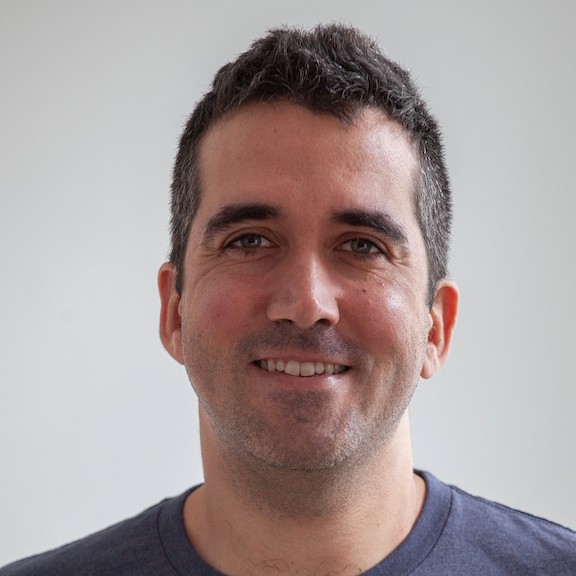
José Côrte-Real (he/him)
José Côrte-Real is a Principal Software Engineer at PagerDuty, where he’s exploring the synergy between distributed systems and machine learning to drive the company’s efforts on automated incident response. He started his career as a researcher in distributed systems at the University of Lisbon and focused his later efforts on defense applications and machine learning for medical devices and vehicular fault prediction.

António Correia (he/him)
Antonio Correia is a Senior Applied Scientist in PagerDuty’s Data Science Core team, specializing in AI-driven customer recommendations on operational maturity, event orchestration rules, and incident response analytics. He is currently developing evaluation frameworks and benchmarks to measure and improve the performance of AI products.
Hosts

Daniel Afonso (he/him)
Daniel Afonso is a Senior Developer Advocate at PagerDuty, SolidJS DX team member, Instructor at Egghead.io, and Author of State Management with React Query. Daniel has a full-stack background, having worked with different languages and frameworks on various projects from IoT to Fraud Detection. He is passionate about learning and teaching and has spoken at multiple conferences around the world about topics he loves. In his free time, when he’s not learning new technologies or writing about them, he’s probably reading comics or watching superhero movies and shows.